
There’s an overwhelming variety of vegan or plant-based meat on the market. Are they worth the extra $10/pound? How or why does your choice matter?
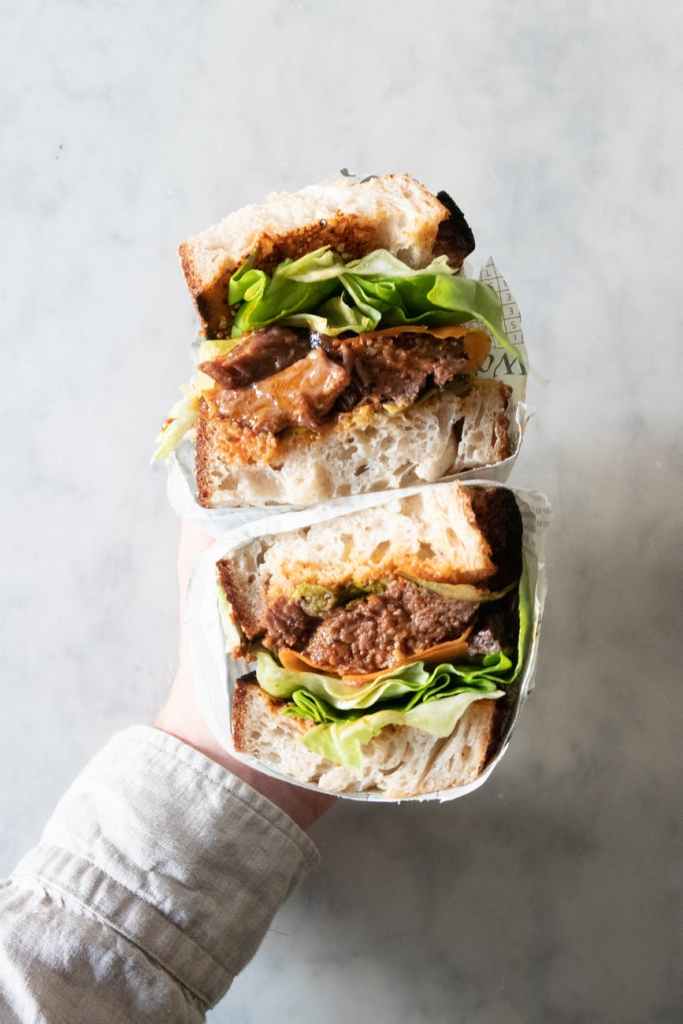
I want you to think about this–
Why do you love the “WHOPPER” or the “Quarter Pounder”?
Or a juicy steak or a BLT sandwich?
A few obvious answers would be–
- value for money and filling
- greasy, guilty, and oddly satisfying
- addictive chewy texture and meat juices
- source of nutrition and taste
- intrinsic drive- we are carnivores!
If I tell you that your meat burger is responsible for climate change, will you eat it?
May be or maybe not.
Well, a bunch of physicians and food scientists hated this idea. They, thus, decided to create a food-fad: Plant-based or vegan meat.
What is Plant-based Meat?
Vegan or plant-based meat is created from plant derivatives to substitute animal meat. It constitutes plant protein, fats, carbohydrates, minerals, and vitamins.
Above all, it is ‘cruelty-free’. No animal slaughter.
It is fascinating to see how well vegan meat mimics its animal counterpart. All thanks to top-quality bio-engineering and multi-million dollar research.
Today, it’s almost impossible to tell the plant-based and animal meats apart in a burger!
What is it Made of and How?
What goes into mastering the texture, feel, and colour of meat substitutes?- this question led me to write what you are reading now.
I found this video super helpful in doing so. Watch it first.
Broadly speaking, vegan meat contains these*:
- Proteins: Soybeans, soy protein, pea protein, almonds, etc.
- Fats: Vegetable oil, canola oil, sunflower oil, sunflower kernels, rice bran oil, coconut oil, flaxseed meal, cocoa butter, peanuts
- Carbohydrates/Sugars: Potatoes, tapioca, rice flour, sweet potato, corn starch, potato starch, sugar, fructose, apple, tomato paste, wheat flour
- Fibre: Brown rice, lentils, black beans, wheat fibre, chickpeas, quinoa, red lentil, buckwheat, adzuki bean, split peas, green peas, whole pearl millet, soy fibre, bamboo, methylcellulose, mushrooms, mung beans, carrot, pumpkin
- Vitamins and Minerals: Iron, vitamin B12, zinc, etc.
- The ‘bleeding’ factor: yeast-produced heme, beet juices, pomegranate powder etc.
*Find extensive nutrition info in this paper.
The proteins, fibre, and fats, when mixed under set heat, pressure, and temperature, form the chewy base. Adding the laboratory-produced heme or beet extract or pomegranate powder gives it the colour and meaty flavour.
Complex fats in vegetable oils are responsible for the oozing meat juices that make you go weak in the knees. Woot!
When these ingredients are mixed in the right proportions, you get the best vegan or plant-based meat. It is, then, made into patties, bricks, blocks, fillets, and other shapes you see in the market.
What’s the Big Deal?
Plant-based meat is neither extracted nor tested using animals. That’s a HUGE load off the livestock and meat production industries.
Here are some numbers–
As a global average, per capita meat consumption has increased by approximately 20 kg since 1961. To feed the increasing demand, the world now produces more than 320 million tonnes of meat each year.
In 2018, an estimated 69 billion chickens, 1.5 billion pigs, 656 million turkeys, 574 million sheep; 479 million goats; and 302 million cattle were killed for meat production.
Meat and Dairy Production, Our World in Data
Mind-numbing, right?!
However, the bigger problem is the resources this meat production needs.
Meat production is an energy-intensive industry. UCLA experts and professors, Amy Rowat and Jennifer Jay say “When you feed animal feed to an animal, most of the calories don’t go toward making meat that we would eat. Most of the calories go toward maintaining the animal… and a lot of the energy that you’re giving the animal doesn’t become meat.”
Moreover, their digestive processes release significant levels of greenhouse gases like methane and carbon dioxide.
According to a report from the United Nations, about 23% of all greenhouse gas emissions come from the production of livestock.
Over time, this would only worsen the climate change crisis.
So, it IS a big deal.
What’s in it for you?
There are a bunch of benefits you could reap by switching to meat substitutes. By choosing plant-based meat over animal meat, you will-
- reduce red-meat intake, which has proven to be healthy
- obtain similar nutrition, energy, and taste (you’re not missing out on much!)
- reduce your carbon footprint
- boost sustainable living
- enjoy burgers and sausages free of cholesterol and guilt!
- as a restaurateur, have more varieties on the menu
The list may seem redundant. But, the moment you order a meatless burger from a ‘meat-filled menu’ it will hit you.
Not saying your burger choices will save the planet. But, little steps matter more than pointless political agendas on paper.
On another hand, the sustainability aspect of plant-based meat has been under scrutiny for a while now. Biology and ecology experts around the world are debating till date if this engineered meat is serving the purpose.
Is Plant-based Meat Better than Animal Meat?
Trick question.
Yes and no.
Studies suggest that plant-based meat gives you the same number of calories as its counterpart.
Despite having zero cholesterol, this meat may lack certain micronutrients including selenium and vitamin B3.
But here’s the thing-
You will go back to animal meat if you are a meat-lover. Companies like ‘Impossible Foods’ and ‘Beyond Meat’ have nailed the look, feel, and taste of vegan meat. But if you love meat, you love meat! Period.
And for some, it is psychological. Many have fond memories, cultural and religious beliefs linked to animal meat. It will be difficult to make this switch in such cases.
Is it Worth?
Ultimately, it boils down to this- Are vegan meat products worth your money, time, and taste buds?
I’d say, yes. It is my personal opinion.
You can choose from a wide range of plant-based meat products in the market. All it takes is the willingness to try. And an open mind.
If you like it, you’ll go again.
If you don’t, you have a hundred other ways to save our planet. Enjoy your steak!
Take-home: Do your research and give vegan meat a shot.
’Cause why not!
 Swathi Kodaikal